|
Tuesdays at 6:00 PM, Foundry Church - 3010 Lakeland Cove, Flowood. Call Matt Flint at (601) 260-8518 or email him at matthewflint.makes@gmail.com or Lance Bowser at (601) 862-8308 or email at lancebowser@msi-inv.com.
Wednesday at 6:00 PM, First Baptist Church Jackson - Summit Counseling Suite - 431 North State St. Jackson. Call Don Waller at 601-946-1290 or email him at don@wallerbros.com.
Monday at 6:30 PM , Vertical Church - 521 Gluckstadt Road Madison, MS 39110. Mr. Roane Hunter, facilitator, LifeWorks Counseling.
Sunday night at 6:00 PM, Grace Crossing Baptist Church - 598 Yandell Rd. Canton. Call Ryan Adams at 662-571-5705 or email him at ryan.adams1747@gmail.com.
|
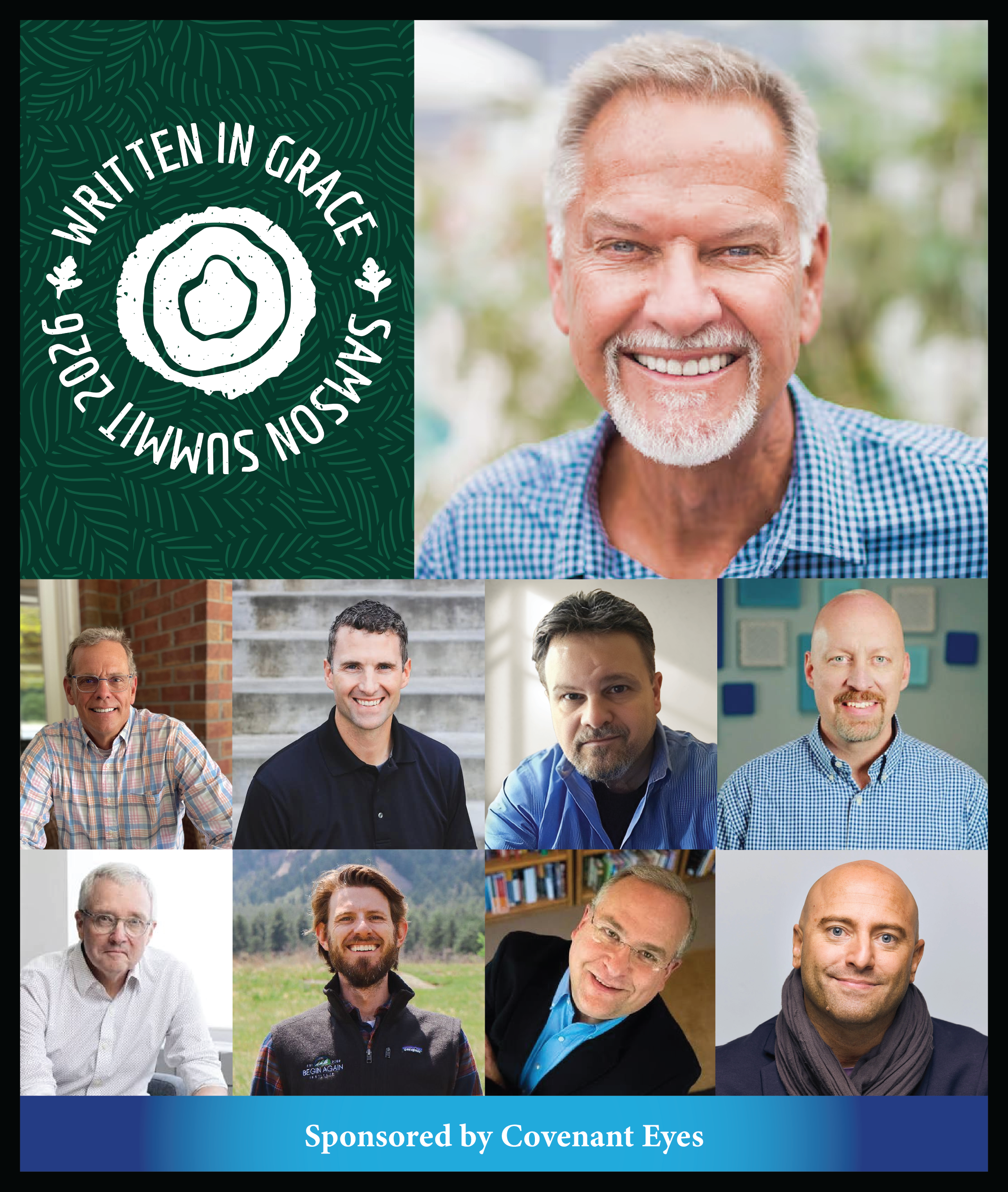
Not everyone can make the trip to Michigan this year. We get it. But we don’t want distance to keep you from being part of what’s happening October 23-25 at the 2026 Samson Summit. The good news is you can !
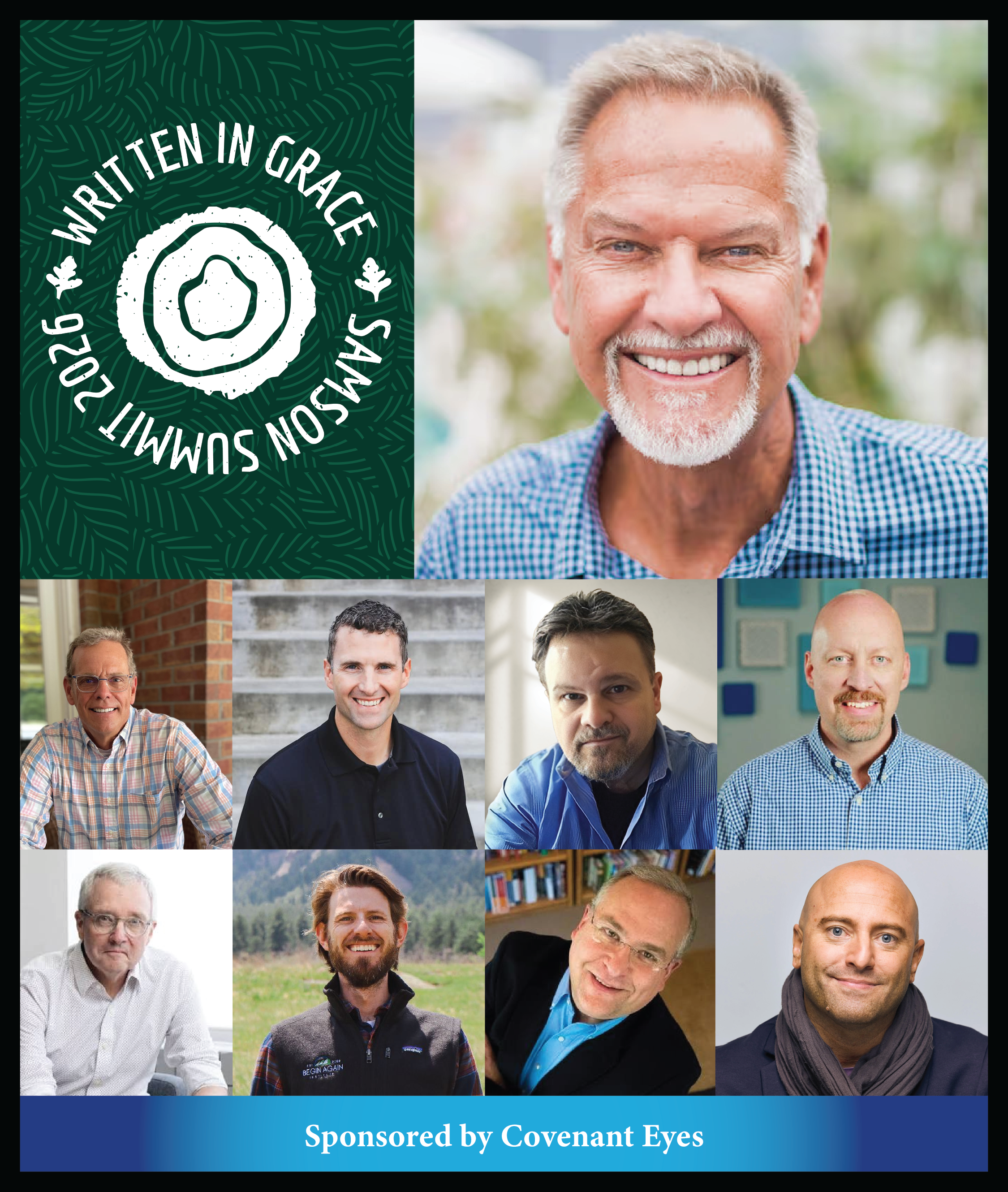
This year’s virtual Summit, sponsored by , features keynote speaker John Lynchand our virtual speakers who will take us deeper into the realities of recovery: our God-given need for connection and belonging, the lies and excuses we use to protect ourselves from pain, what it takes to stay emotionally engaged when our partners are hurting, and how we can move beyond a recovery defined simply by success and failure toward a life that is embodied, relational, and faithful.
It’s about learning to be known. Learning to stay when we want to run. Learning to receive grace instead of trying to earn it. And discovering that even the parts of our stories we would rather erase can look different when we see them through the eyes of grace.
Can’t come to Michigan? Come anyway. Your chair may be somewhere else, but your brothers will be right there with you.
Join us online October 23-25 for the 2026 Samson Summit
See below for more information!
Eddie Capparucci, Ph.D., LPC, CSAS
Recovery is about more than achieving sobriety or changing destructive behaviors. It also requires learning how to remain emotionally present with those who have been hurt by our actions—especially when their grief, anger, or pain is difficult to face. When a partner is hurting, the instinct to explain intentions, correct details, defend progress, or prove what “really happened” may feel protective, but these responses can leave a grieving partner feeling even more alone. Staying engaged requires a different kind of emotional maturity: the ability to remain grounded, attentive, curious, and emotionally available without becoming defensive or withdrawing when things get uncomfortable.
In this presentation, participants will learn the Stay Engaged Method, eight essential steps for remaining emotionally connected with a grieving partner during difficult moments. Rather than relying on “I don’t know what to do,” participants will leave with a practical framework for responding to pain in ways that foster safety, connection, accountability, and healing.
Jeff Schulte, Founder, Tin Man Ministries
We were created for connection. The need to matter, belong, and experience secure attachment is not a weakness to overcome but a profound reflection of being made in the image of a relational God. Yet many of us have learned to distrust our neediness, minimize our longings, or believe that changing how we think should be enough to change how we live.
This presentation invites participants to reconsider their needs and longings not as liabilities, but as pathways to intimacy and transformation. Love is expressed through needs and the meeting of needs, and our willingness to be known—including allowing others to see what we need—determines how deeply we can experience being loved. By understanding how we are hard wired for connection, we can begin moving away from performance and self-protection and toward the authentic relationships through which we learn to love, be loved, and grow.
Matt Wenger, MA, LPC, CCPS, CSAT, Executive Clinical Director of Begin Again Institute
What if recovery is not a separate set of practices we perform, but a way of learning to live more fully and faithfully as human beings? Drawing from the novels Gilead and Jayber Crow, Matt Wenger invites participants to expand their understanding of recovery beyond the pursuit of success or the avoidance of failure and toward a more embodied, relational, and sustainable way of life.
Through literature and the contemplative traditions of the Church, Matt offers another framework: a manageable life of faithful recovery. Rather than striving to become the hero of our recovery story, we can learn to inhabit the ordinary limits of our lives, make room for failure, and become more attentive to our embodied needs and desires. The contemplative tradition shifts the emphasis from simply knowing about God to experiencing relationship with God, offering ancient practices that closely parallel the slow, relational work of recovery. In doing so, recovery becomes less about achieving an ideal and more about learning to live faithfully, honestly, and fully within the life we have been given.
Nick Stumbo, Executive Director of Pure Desire Ministries
Most of us enter recovery after years of rationalizing, minimizing, denying, or explaining away our behavior. Even after recovery begins, those patterns do not simply disappear. Our brains are wired for self-preservation—to move away from what feels threatening, uncomfortable, or painful—and many of the lies and excuses we tell ourselves began as attempts to protect us from something we did not know how to face. But what begins as self-protection can eventually become self-destruction. When we continually avoid pain, shame, fear, vulnerability, or uncomfortable truths, the very strategies meant to protect us can keep us trapped in the patterns from which we are trying to recover.
In this presentation, Nick explores what lies beneath the rationalizations and excuses common in early recovery and how understanding these behaviors can change the way we approach them. Rather than continuing to run from the things we have spent a lifetime avoiding, recovery invites us to turn toward them with honesty, curiosity, and courage. In doing so, we create space to experience a level of God’s grace we may never have allowed ourselves to receive, acceptance from other men we did not know was possible, and the deeper healing that avoidance has kept just beyond our reach.
Jim Cress, CSAT, CPTT, CMAT, LPC, Certified Daring Way Facilitator
Drawing from the Old Testament book of Nehemiah, Jim explores what it means to walk honestly within our stories as an essential part of ongoing recovery. Using Nehemiah’s journey of confronting what has been broken and undertaking the work of rebuilding, Jim identifies 16 steps and four key questions that help us examine our own stories—from ground zero to the “red dot.” Along the way, he invites us to consider where we have been, where we are now, and what it looks like to continue moving forward with honesty, intention, and grace.
Back during my architecting (private sector) days (1995-2006), I worked for a midsize firm in Jackson, and it was there where I eventually found myself somewhat under the tutelage of a semi-retired architect who'd been hired as the "quality control" man. This elder statesman's job originally was to check construction documents for accuracy / coordination issues. Simple as that.
He seemed kindly and adroit at first glance with his diminutive, pot-belly scale, false teeth & mop of silver hair neatly parted to one side. Always wearing slacks, a dress shirt & tie, Mr. T, as he was quickly dubbed, had an appearance that did absolutely nothing to antagonize / draw concern. Instead, he was the type of Medicare man figure who easily could've passed for either a charity hospital baby rocker or perhaps a clean-shaven, pretending-to-be-an-architect Saint Nick. Approachable to a fault. Shy, demure. Meek? Hardly.
As such, everyone (the vast majority of which were dramatically younger) couldn't help but appreciate him almost immediately. I mean, what's not to like?
But I could smell doo doo even at our first juncture, and it really bothered me that others couldn't.
-------------------------
I've done my fair share of therapeutic work centered around my parents (who hasn't within the Samson Society community?). During my young adult years (1994), that was mainly centered around how the dynamics within their marriage / our youthful "triad" (I'm an only child) family impacted my development (or lack thereof) as a masculine man (my focus, back then was primarily internal). Thankfully though, none of that work detailed one iota of cruel / hateful dealings (towards me nor anyone else). That simply wasn't nor has ever been baked into my parents' modus operandi. As such, they're many things but not that.
Nonetheless, my grandmother (on my father's side) could have been the poster child for cruel & hateful (particularly in the '60s), and she felt zero regret therein. Similarly, my mother-in-law (& to a degree father-in-law) were situated within the same boat.
So what exactly am I referring to when I say cruel and hateful?
These are folks who relish watching others suffer. Particularly others of their own race / creed / demographic, and suffering of the type that's public / semi-public. But too, allowing themselves similar "fun" / satisfaction by turning their attention to the marginalized isn't out of the question. Therefore, gossip, for folks like this, is like fine wine. Hence, working (corporate / public sector), socializing (Country Club), churching (mega), even watching the nightly news (Cable TV) naturally reap multiple hits: high earnings, esteem, ticket out of Hell, the latest juicy talk & prepackaged stories of the downtrodden.
But beyond gossip, there's the cruely-fueled (versus curious) gawking, which typically must be done covertly if one's supposedly a good Christian.
All-in-all, envy may very well be what's motivating this particular dark heartedness but not necessarily. Instead, perhaps it's simply a sick fetish.
-------------------------
What's truly noteworthy is one of Mr. T.'s daughters grew to become a superstar sports architect not too long after starting her own career in the same field (far & away from her humble origins in Mississippi). Therefore, not only due to her gender but also due to her resilient relevancy within that space, I'm reminded (quite often, in fact) of her legendary ballpark / urban planning creative juices as they continue to further the notion of Americana (the great American pastime) whilst filling the pocketbooks of the team owners from one end of the country to the other.
Having never had any interest in sports, I could care less about sports venues no matter the nostalgia factor / apple pie historical relevance. And, arguably, most architects are in agreement with Rob that anything associated with the word "team" is an outright bore.
But the public disagrees. For sports arenas are akin to the representative cathedrals of yesteryear.
Nevertheless, just this week, my father slipped a copy of a features piece (that had no doubt come out of some recent periodical) detailing (yet again) Mr. T's infamous superstar sports architect daughter (she's in her mid to late 60s now), surmising the story, yet again, of her humble beginnings + origin story as the de facto baseball arena design consultant go-to on planet Earth.
And yet again, my thoughts immediately turned back to what I remember of her father. Vividly remember of her father. And this is sad to admit to for she actually came to my aforementioned employer (adjacent to an end-of-the-year holiday) and gave a short presentation regarding her current stadium project.
That's what I'd like to remember for that's what the press' appropriately celebratory work should be doing.
-------------------------
Mr. T's office was adjacent to the "drafting room" (which is where I had a desk for 3-5 years of my tenure therein) within the firm we both worked for. The space he'd been given to work wasn't large at all, but it did have enough room (barely) for a standard sized metal desk. Within just a few years, every inch of said space was filled (including his desktop), almost halfway to the 8'-0" ceiling with "half-size" sets of "in progress" construction documents. These sets were his to "redline". This was his way of denoting errors that needed addressing.
Mr. T's approach to quality control really had nothing to do with whoever's justification it was in hiring him. Instead, it had everything to do with him justifying his own value as a golden year professional who'd really never made much of any mark on the profession nor the localized built environment (for whatever reason). This was his private chip.
Architects are trained to be visionaries. "Master builders" as they say. Our entire pedagogy is constructed under the guise of enlightening society via our masterful (designed) control of the built environment, Renaissance man flair & (typically) high altitude liberal mindedness.
Therefore, considering his training, Mr. T, could not help but turn his focus on us as his site / canvas. I assume this was his attempt at a last hoorah within a perfectly imperfect (remember, we were quite young & inexperienced) petri dish of professionals (interns & otherwise) who were simply attempting to meet deadlines whilst placating clients / contractors along the way.
-------------------------
And, of course, we're all cruel and hateful at times. It's baked into our DNA as sinners, but there truly are some human beings that are deeply cruelty-averse.
One of the favorite aspects of my parents is their revulsion therein. I have to wonder if seeing my grandmother's ongoing / attituded cruelty somehow served to inoculate them both from her influence.