Because recovery was never meant to be another performance.
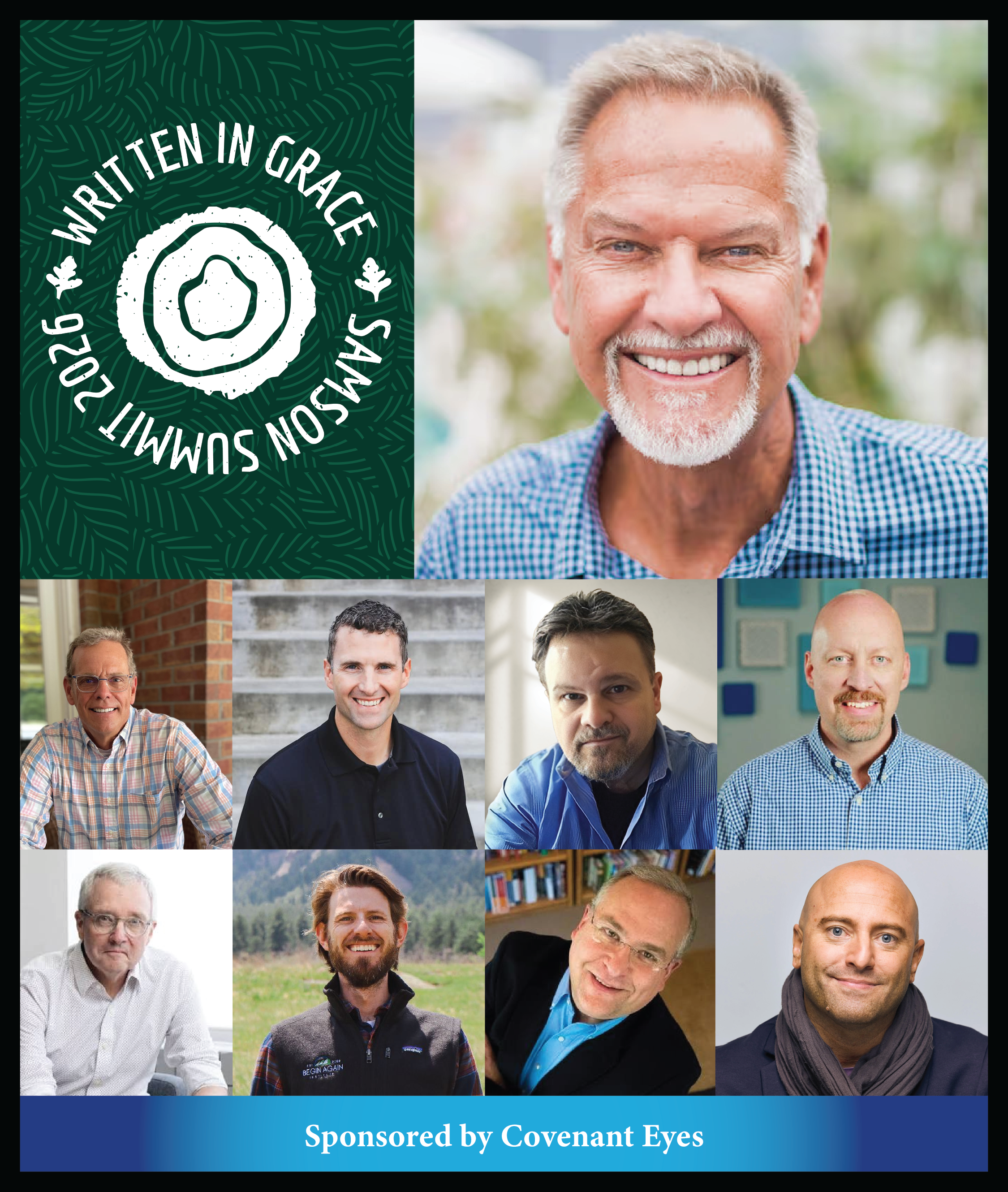 Not everyone can make the trip to Michigan this year. We get it. But we don’t want distance to keep you from being part of what’s happening October 23-25 at the 2026 Samson Summit. The good news is you can !
This year’s virtual Summit, sponsored by , features keynote speaker John Lynchand our virtual speakers who will take us deeper into the realities of recovery: our God-given need for connection and belonging, the lies and excuses we use to protect ourselves from pain, what it takes to stay emotionally engaged when our partners are hurting, and how we can move beyond a recovery defined simply by success and failure toward a life that is embodied, relational, and faithful.

It’s about learning to be known. Learning to stay when we want to run. Learning to receive grace instead of trying to earn it. And discovering that even the parts of our stories we would rather erase can look different when we see them through the eyes of grace.
Can’t come to Michigan? Come anyway. Your chair may be somewhere else, but your brothers will be right there with you.
Join us online October 23-25 for the 2026 Samson Summit
As a special gift from Covenant Eyes to those who attend the livestream, you will receive 5 bonus sessions, including the one above, from leading counselors and thought leaders that will help you gain even more momentum in your journey to live porn-free.
See below for more information!
The Stay Engaged Method: 8 Essential Steps for Supporting Your Partner Through the Pain of Betrayal
Eddie Capparucci, Ph.D., LPC, CSAS
Recovery is about more than achieving sobriety or changing destructive behaviors. It also requires learning how to remain emotionally present with those who have been hurt by our actions—especially when their grief, anger, or pain is difficult to face. When a partner is hurting, the instinct to explain intentions, correct details, defend progress, or prove what “really happened” may feel protective, but these responses can leave a grieving partner feeling even more alone. Staying engaged requires a different kind of emotional maturity: the ability to remain grounded, attentive, curious, and emotionally available without becoming defensive or withdrawing when things get uncomfortable.
In this presentation, participants will learn the Stay Engaged Method, eight essential steps for remaining emotionally connected with a grieving partner during difficult moments. Rather than relying on “I don’t know what to do,” participants will leave with a practical framework for responding to pain in ways that foster safety, connection, accountability, and healing.
Hard Wired for Connection: Why Our Need to Matter, Belong, and Be Loved Is Part of God’s Design
Jeff Schulte, Founder, Tin Man Ministries
We were created for connection. The need to matter, belong, and experience secure attachment is not a weakness to overcome but a profound reflection of being made in the image of a relational God. Yet many of us have learned to distrust our neediness, minimize our longings, or believe that changing how we think should be enough to change how we live.
This presentation invites participants to reconsider their needs and longings not as liabilities, but as pathways to intimacy and transformation. Love is expressed through needs and the meeting of needs, and our willingness to be known—including allowing others to see what we need—determines how deeply we can experience being loved. By understanding how we are hard wired for connection, we can begin moving away from performance and self-protection and toward the authentic relationships through which we learn to love, be loved, and grow.
Failure, Embodiment, and the Manageable Life of Faithful Recovery: A Framework for Spiritual Direction in Pornography Addiction Recovery
Matt Wenger, MA, LPC, CCPS, CSAT, Executive Clinical Director of Begin Again Institute
What if recovery is not a separate set of practices we perform, but a way of learning to live more fully and faithfully as human beings? Drawing from the novels Gilead and Jayber Crow, Matt Wenger invites participants to expand their understanding of recovery beyond the pursuit of success or the avoidance of failure and toward a more embodied, relational, and sustainable way of life.
Through literature and the contemplative traditions of the Church, Matt offers another framework: a manageable life of faithful recovery. Rather than striving to become the hero of our recovery story, we can learn to inhabit the ordinary limits of our lives, make room for failure, and become more attentive to our embodied needs and desires. The contemplative tradition shifts the emphasis from simply knowing about God to experiencing relationship with God, offering ancient practices that closely parallel the slow, relational work of recovery. In doing so, recovery becomes less about achieving an ideal and more about learning to live faithfully, honestly, and fully within the life we have been given.
Lies and Excuses We Make in Early Recovery: Moving from Self-Protection to Grace, Acceptance, and Healing
Nick Stumbo, Executive Director of Pure Desire Ministries
Most of us enter recovery after years of rationalizing, minimizing, denying, or explaining away our behavior. Even after recovery begins, those patterns do not simply disappear. Our brains are wired for self-preservation—to move away from what feels threatening, uncomfortable, or painful—and many of the lies and excuses we tell ourselves began as attempts to protect us from something we did not know how to face. But what begins as self-protection can eventually become self-destruction. When we continually avoid pain, shame, fear, vulnerability, or uncomfortable truths, the very strategies meant to protect us can keep us trapped in the patterns from which we are trying to recover.
In this presentation, Nick explores what lies beneath the rationalizations and excuses common in early recovery and how understanding these behaviors can change the way we approach them. Rather than continuing to run from the things we have spent a lifetime avoiding, recovery invites us to turn toward them with honesty, curiosity, and courage. In doing so, we create space to experience a level of God’s grace we may never have allowed ourselves to receive, acceptance from other men we did not know was possible, and the deeper healing that avoidance has kept just beyond our reach.
Rebuilding from Ground Zero: 16 Steps and 4 Key Questions for Ongoing Recovery from Nehemiah
Jim Cress, CSAT, CPTT, CMAT, LPC, Certified Daring Way Facilitator
Drawing from the Old Testament book of Nehemiah, Jim explores what it means to walk honestly within our stories as an essential part of ongoing recovery. Using Nehemiah’s journey of confronting what has been broken and undertaking the work of rebuilding, Jim identifies 16 steps and four key questions that help us examine our own stories—from ground zero to the “red dot.” Along the way, he invites us to consider where we have been, where we are now, and what it looks like to continue moving forward with honesty, intention, and grace.
No comments:
Post a Comment